
Construction Firm CPA in California: Tax Strategy for Builders
Construction is a complex industry. Between shifting project timelines, overlooked tax credits, and the ongoing management of contractors, your bookkeeping and tax preparation can become complicated fast.
That’s where we come in.
You handle the pressure of active projects. You coordinate contractors and crews. You manage the day-to-day operations of your construction business. But how often do you review whether your business is keeping every dollar it should?
As an experienced construction business CPA in San Francisco, we help contractors identify missed opportunities, improve tax strategy, and strengthen profitability.
Let’s make things happen for you.

California Construction Tax Guide: Deductions, R&D Credits, AB5 & Entity Structure
Construction businesses face a specific set of tax and accounting challenges: project-based income, labor-heavy cost structures, contractor classification risk, and timing issues that don’t show up in most generic small-business tax advice.
This guide walks through the areas that matter most for California contractors — from everyday deductions to entity structure to year-end planning.
Table of Contents
Common Tax Deductions for Contractors
Construction businesses have more deductible categories than most industries, but they’re often tracked inconsistently or missed entirely because expenses get lumped together instead of itemized by type.
Materials
Fully deductible in the year used on a job (or capitalized into COGS depending on your accounting method). Track by project, not just by category, so job costing and tax deductions line up.
Tools & small equipment
Hand tools, power tools, and small equipment can typically be expensed immediately under the de minimis safe harbor election — up to $2,500 per item without applicable financial statements, or $5,000 per item if the business has audited financial statements — rather than depreciated.
Heavy equipment
Larger equipment purchases are deductible, but usually through depreciation or Section 179 rather than a flat expense.
Vehicle and mileage
Trucks and vehicles used for the business can be deducted either via actual expenses (fuel, maintenance, insurance, depreciation) or the standard mileage rate — 72.5 cents per mile for the first half of 2026, raised to 76 cents per mile effective July 1, 2026 in a rare mid-year IRS adjustment — whichever method yields the larger deduction. Job-site driving, supply runs, and travel between projects all count; commuting from home does not.
Subcontractor payments
Fully deductible as a direct job cost, but only if 1099s are issued correctly.
Insurance
General liability, workers’ comp, commercial auto, and bonding costs are all deductible business expenses.
Software
Job costing platforms, estimating software, accounting tools, and project management software are deductible operating expenses.
Professional fees
CPA, bookkeeping, legal, and consulting fees related to the business are deductible.
The biggest miss isn’t forgetting these exist — it’s failing to track them at the job level, which means you lose the ability to see which deductions are tied to which projects when it’s time to evaluate profitability.
Labor Burden and Payroll Taxes
The wage you pay a worker is not what that worker actually costs you. “Labor burden” is the full cost of employing someone, and contractors who price jobs off wage rate alone are almost always underbidding.
What’s included in true labor cost:
Employer payroll taxes
Social Security and Medicare (employer’s matching share), federal unemployment tax (FUTA), and state unemployment insurance (SUI)
Workers' compensation
Premiums vary significantly by trade classification; a roofer’s workers’ comp rate is nowhere near a bookkeeper’s, and misclassifying trade codes can distort your rate
Benefits
Health insurance, retirement contributions, and any paid time off
Overtime
Federal and California overtime rules require premium pay past daily and weekly thresholds, which can materially change the real cost of a labor-heavy job if not planned for
Why this matters for tax planning and bidding:
A worker paid $30/hour might actually cost $40–45/hour once burden is layered on. If your job costing and bids are built on the $30 number, every job is quietly underpriced — and underpriced jobs show as “profitable” on paper right up until tax time, when the full payroll tax liability lands.
Building burden rate into every estimate is one of the simplest ways to protect margin and avoid a mismatch between book profit and actual cash tax liability.
Equipment Purchases and Depreciation
Buying equipment creates a deduction — but when and how much of that deduction you get depends entirely on which method you use, and timing purchases wrong can waste tax savings you were entitled to.
Section 179
Allows you to deduct the full purchase price of qualifying equipment and vehicles in the year it’s placed in service — up to $2,560,000 for 2026, phasing out dollar-for-dollar once total qualifying purchases exceed $4,090,000 — rather than depreciating it over several years.
Bonus depreciation
Similar concept, but with no dollar cap of its own. The OBBBA (2025) restored 100% bonus depreciation permanently for qualifying property placed in service after January 19, 2025 — the phase-down toward zero that had been scheduled through 2027 no longer applies. Because bonus depreciation has no income limitation and can create a net operating loss, while Section 179 is capped at business taxable income, most contractors apply Section 179 first for control over which specific assets get expensed, then let 100% bonus depreciation cover the rest.
Vehicles
Trucks and heavy vehicles used for business have specific weight-based rules that affect how much can be expensed immediately versus depreciated; passenger vehicle deductions are capped much lower than heavy equipment.
Timing
Equipment has to be “placed in service” — not just purchased — by year-end to count for that tax year. A truck bought December 20th but not delivered until January doesn’t help this year’s return. This is why equipment purchase timing should be a deliberate year-end planning conversation, not a last-minute decision on December 30th.
Job Costing & Percentage-of-Completion Accounting
Most construction businesses lose money not because they aren’t profitable — but because they don’t know which jobs are profitable. Tracking revenue and expenses at the company level hides the two or three jobs quietly bleeding cash.
Why job costing matters
Job costing means every cost — labor, materials, subcontractors, equipment, and a fair share of overhead — is assigned to the specific project that generated it. Instead of one P&L for your whole business, you get a P&L for every job. That’s how you find out that your $2M commercial build is running a 4% margin while your smaller residential jobs are running 18%.
Direct costs (materials, labor, subs) are easy to assign. Overhead — office staff, insurance, equipment depreciation, software — needs an allocation method (usually by labor hours or direct cost percentage) so every job carries its fair share.
Percentage-of-completion accounting
For most contractors with long-term contracts, the IRS and GAAP require (or strongly favor) the percentage-of-completion method (PCM) instead of cash or completed-contract accounting. Under PCM, revenue and profit are recognized as the job progresses — measured by costs incurred to date divided by total estimated costs — rather than waiting until the project wraps.
This matters for two reasons:
- Tax timing: The IRS requires PCM unless a contractor qualifies for the small-contractor exception: average annual gross receipts under roughly $31–32 million (inflation-adjusted, 2026) over the prior three tax years, and the contract is expected to complete within two years of starting. Getting this wrong can trigger an audit or a costly method change.
- Real profitability visibility: PCM shows you if a job is running over budget while it’s still in progress — not six months after it’s done and the money’s gone.
What a good job costing system tracks
- Budgeted vs. actual cost by category (labor, material, sub, equipment)
- Work-in-progress (WIP) schedule — the single most important report a contractor’s CPA should be producing monthly
- Change orders tracked separately so they don’t distort original bid accuracy
- Retainage receivable/payable tracked by job
Why this feeds directly into tax planning
When costs and revenue are tracked by project rather than lumped into one company-wide P&L, a business can see in real time which jobs are ahead of or behind budget, how much revenue is likely to be recognized under percentage-of-completion by year-end, and how much taxable income the business is actually on track for — well before the year closes. Without job-level visibility, tax planning becomes guesswork based on total cash in the bank, which is exactly what leads to estimated tax and year-end surprises.
R&D Tax Credit for Construction Businesses
Most contractors assume the R&D credit is for tech companies and labs. It isn’t. If your team is solving a technical problem that doesn’t have an obvious, pre-existing solution, there’s a real chance some of that work qualifies.
What typically qualifies in construction
- Value engineering — redesigning a structural or mechanical system to reduce cost or improve performance
- New construction methods or techniques — modular assembly, prefabrication process development, novel formwork or foundation systems
- Energy modeling and LEED/sustainability design — testing and iterating on building envelope or HVAC systems to hit performance targets
- BIM/technology integration — developing new processes for clash detection, coordination, or automation on a project
- Prototyping — mock-ups, test assemblies, or pilot installations before full rollout
What doesn't qualify
Routine repairs, standard installations using established methods, and aesthetic-only design changes generally don’t count. The credit is for technical uncertainty resolved through a process of experimentation — not just “we did something new for us.”
How the credit works
The R&D credit is calculated on qualified research expenses (QREs) — primarily wages for employees doing the technical work, plus a portion of supply costs and contract research. Both federal and California offer credits, and they can be claimed together. Because California doesn’t conform exactly to federal QRE rules, this is an area where a lot of contractors leave money on the table simply because their preparer never asked the right questions about how a project got built, not just what it cost.
Practical note:
California requires an affirmative election between the regular credit method and the Alternative Simplified Credit (ASC) method on the originally filed return — this became mandatory starting with the 2025 tax year under SB 711, which also repealed California’s old Alternative Incremental Credit method. Once made, the election is binding for that year and generally can’t be undone without Franchise Tax Board consent, so it’s worth modeling both methods before filing rather than defaulting to whichever was used last year. Contractors doing consistent, sizeable technical work (value engineering, prefab process development, energy modeling) benefit most from running the comparison every year, since which method wins can shift as QRE spending changes.
Why the range is so wide ($10K–$5M)
The size of the credit scales with payroll tied to qualifying activities. A small specialty trade contractor with a couple of engineers might land in the low five figures. A large design-build or civil infrastructure firm with dozens of staff doing iterative technical problem-solving across multiple projects can see six or seven figures — which is where credits in the hundreds of thousands to low millions come from.
Subcontractor Classification & AB5
Getting subcontractor classification wrong creates two separate risks: a tax deduction problem now, and a labor law problem later. California is one of the strictest states in the country on this issue.
The ABC Test
Under AB5, a worker is presumed to be an employee unless the hiring business can prove all three of the following:
- (A) Control — The worker is free from the control and direction of the hiring business in how the work gets done, both under contract and in actual practice.
- (B) Outside the usual course of business — The work performed is outside the hiring business’s usual course of business. (This is often the hardest prong for general contractors: if you’re a GC hiring a framer, framing is arguably central to what a construction business does — not incidental to it.)
- (C) Independently established trade — The worker customarily and independently operates their own business doing that same type of work for others, not just for you.
Fail even one prong, and the worker is legally an employee — regardless of what your contract says or what the worker prefers.
Construction-specific carve-out
California’s AB5 provides a specific carve-out for construction subcontractors — a different, more specific exemption than the general business-to-business exemption other industries rely on. To qualify, all of the following must be met:
The subcontract is in writing
The subcontractor holds a valid Contractors State License Board (CSLB) license, and the work performed is within the scope of that license
The subcontractor has any other business license or tax registration required where the work is performed
The subcontractor maintains a business location separate from the contractor’s
The subcontractor has authority to hire and fire others who help perform the work
The subcontractor assumes financial responsibility for errors or omissions (via insurance, bonds, or indemnity obligations)
The subcontractor is customarily engaged in an independently established business doing the same type of work for other clients
It’s not a blanket exemption — every condition has to be met and documented. The one most commonly missed: a subcontractor’s own active CSLB license specifically, not just a general business license.
Paperwork that actually protects you
- W-9s — Collect a completed W-9 from every subcontractor before they start work, not after you’re preparing 1099s in January. No W-9, no clean paper trail, no deduction protection if it’s ever questioned.
- 1099s — Subcontractor payments of $2,000 or more in a calendar year (the federal and California threshold as of the 2026 tax year, raised from $600 under OBBBA) must be reported on Form 1099-NEC. Missing or late 1099 filings can result in penalties and can jeopardize the deductibility of those payments.
- Written subcontractor agreements — not a handshake.
- Proof of the sub’s own CSLB contractor’s license (not just a general business license) and insurance.
- Evidence the sub works for other clients, not just you.
What's at stake
Misclassification exposure isn’t just back taxes — it includes penalties, potential liability for unpaid workers’ comp premiums, and unemployment insurance claims that can span multiple years if caught in an audit.
Estimated Tax Payments
One of the most common surprises for contractors: a genuinely profitable year ending in a tax bill that feels bigger than it should, plus underpayment penalties on top.
Why this happens:
- Lumpy, project-based income — A big job closing out in Q3 can generate most of a year’s profit in one quarter. If estimated payments were based on evenly-spaced prior-year income, the actual liability outpaces what’s been paid in.
- Cash vs. taxable income mismatch — Retainage held back, unbilled work in progress, and percentage-of-completion accounting can all create taxable income that doesn’t match the cash sitting in the bank account.
- Payroll and equipment decisions made late — Deductions that could have offset income (equipment purchases, retirement contributions) often get considered too late in the year to actually change the estimated payment calculation.
The fix isn't paying more — it's paying at the right time.
Reviewing projected job completions and profitability each quarter, rather than defaulting to a flat percentage of prior-year tax, lets estimated payments track actual income and avoids both the surprise bill and the underpayment penalty.
Entity Structure
The legal structure a construction business operates under changes how profit is taxed, how owners get paid, and how much self-employment tax gets paid along the way.
LLC (default/disregarded or partnership taxation)
Simple to set up, offers liability protection, but by default all profit is subject to self-employment tax for the owner(s).
S corporation
Owners can split income between a reasonable W-2 salary and distributions, and distributions aren’t subject to self-employment tax — a meaningful savings once profit reaches a certain level. Comes with payroll requirements and more administrative overhead.
C corporation
Less common for owner-operated construction businesses due to double taxation (corporate tax, then tax again on dividends), but can make sense in specific situations involving reinvestment, benefits structuring, or eventual sale.
Partnership
Common for joint ventures between contractors or with outside investors; profit and loss pass through to partners, but self-employment tax treatment depends on the partner’s role (general vs. limited).
There’s no universally “best” structure — the right one depends on profit level, how many owners are involved, whether the business plans to bring on partners or investors, and how actively each owner works in the business. This is a decision worth revisiting as revenue grows, not something to set once and forget.
Year-End Tax Planning Checklist
Practical, dated actions to take before December 31 — not after:
☐
Review job costing and WIP schedules for every active project to estimate year-end taxable income
☐
Time equipment and vehicle purchases — remember, assets must be placed in service (not just ordered or paid for) by December 31 to count for the current year
☐
Reconcile subcontractor files — confirm W-9s are on file for every 1099 vendor before January 1099 deadlines hit
☐
Review estimated tax payments against actual year-to-date profit, and true up Q4’s payment if income ran ahead of prior projections
☐
Check retirement plan contributions — some plans (like SEP-IRAs) can still be funded up until the filing deadline, but plan setup deadlines are often earlier
☐
Confirm entity structure decisions — S-corp elections, for instance, generally need to be made earlier in the year or by a specific deadline to apply retroactively
☐
Review payroll and labor burden for the year to catch any misclassified workers or missed overtime calculations before W-2s and 1099s go out
☐
Clean up bookkeeping so financials are accurate and job-costed heading into tax prep — messy books at filing time cost more in preparer hours and missed deductions than cleanup earlier would have
You Can't Afford To Not Have a Construction CPA in California
Here at Basta & Company, we’re not just here to help you pay as little tax as legally possible. We’re here to help your construction business run more profitably. Here are just a few of the ways we put more money in your pocket.

R&D Tax Credit
Depending on your size and type of construction – your business can likely save anywhere from $10,000 to $5 million through what’s known as the R&D Tax Credit.
At Basta & Company, we help construction companies maximize eligible tax credits at state and federal level in order to put more money back into their businesses.

Track Profit per Project
In the construction world, revenue and businesses expenses should be tracked per project – not as a whole. Otherwise, how do you know which projects are making the most money for your business?
At Basta & Company, we have a system to help you break down and track the Profit & Loss Statement and Balance Sheet per project, so you know exactly how your business is doing inch-by-inch.

Avoid Hiring Risk
Hiring contractors in any state is risky. Hiring contractors in San Francisco, California can be doubly hazardous. Due to the relatively new labor law, AB5, your business has to prove its hires are sub-contractors, rather than employees. And it has to be in writing!
Navigate the complexities of sub-contractor vs. employee labor laws, and put the proper documentation in place to mitigate audit risk.
You do not need to know exactly what service you need before reaching out! Let’s talk.
Who do we work with?
We are dedicated construction business CPA experts in California and proud to work with any construction-related business including construction companies, property management firms, developers, architecture and engineering firms.
- General Contractors & Builders
- Specialty Trade Contractors
- Civil & Infrastructure Contractors
- Design-build firms
- Developers & Real Estate Builders
- Service-Based Trade Companies
If any of that sounds familiar, we should talk.
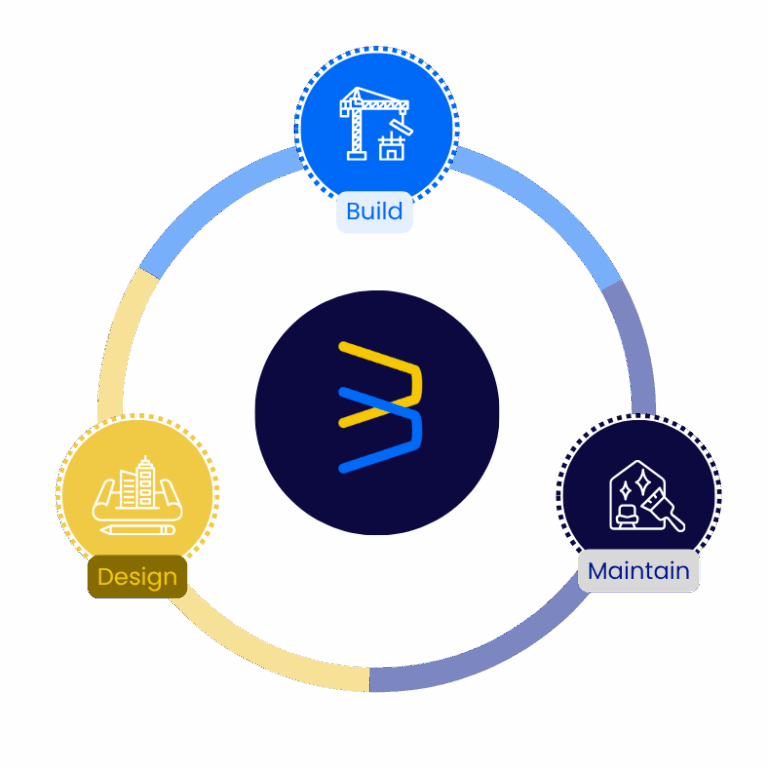
We Keep Advisory, Taxes, Payroll and more under one roof.
Plan For Construction Taxes
We work to uncover every tax break, incentive, and deduction available to your construction business for tax filings year-round. You can rest easy knowing your taxes are submitted on time, error-free, and optimized for minimal tax liability.
Construction Advisory Services
As a business owner, it’s hard to know whether you’re making the right financial decisions for your company. We’ll guide you on business structure, financing, financial projections and more to position your construction business for success.
Construction Fractional CFO
As your construction business grows, financial management only becomes more complex. We provide part-time and full-time outsourced CFO services to give you the financial stability you need for a fraction of the cost.
Our clients want more than compliance. They want visibility. Strategy. Better decisions. Stronger systems.
- Where their money is going
- Which services are actually profitable
- How to improve cash flow
- What decisions will move the business forward
- How to scale without financial chaos

Industry Expertise

Do you only work with construction businesses in San Francisco?
No. Basta & Company is based in the San Francisco Bay Area, but we serve construction businesses across California.
Can you help clean up messy QuickBooks records?
Yes. Many construction business owners come to us because their books are behind, inaccurate, or not set up for job costing. We can help clean up your accounting and build a better system going forward.
Can you help me understand which jobs are profitable?
Yes. Job costing and profitability reporting are core parts of construction accounting. We help you track costs by project so you can see where your margins are strong and where they need improvement.
Can you help reduce taxes for my construction business?
We help construction business owners with proactive tax planning, entity structure review, deductions, depreciation planning, estimated taxes, and year-end strategy. The goal is to reduce surprises and identify legal tax-saving opportunities before deadlines pass.
Do you offer accounting only, or do you also provide advisory?
We provide more than basic bookkeeping. Depending on your needs, we can support tax planning, accounting cleanup, financial reporting, cash flow planning, job costing, and fractional CFO advisory.
Can you work with my current QuickBooks file?
Yes. We can review your existing QuickBooks setup, clean it up if needed, and improve the structure so it better supports construction reporting and decision-making.
When should I hire a construction CPA?
You should consider hiring a construction CPA if your revenue is growing, your books are messy, you are unsure about job profitability, you are surprised by taxes, or you need better financial systems to support growth.
How do we get started with Basta & Company?
Fill out our contact form to share your business details and biggest financial challenges. We’ll review everything, and if it looks like a good fit, we’ll invite you for a call to dive deeper. No obligation.
Frequently Asked Questions
Still Have A Question ?
We’re here to help. Reach out to our team and we’ll get back to you as soon as possible.